 By Admin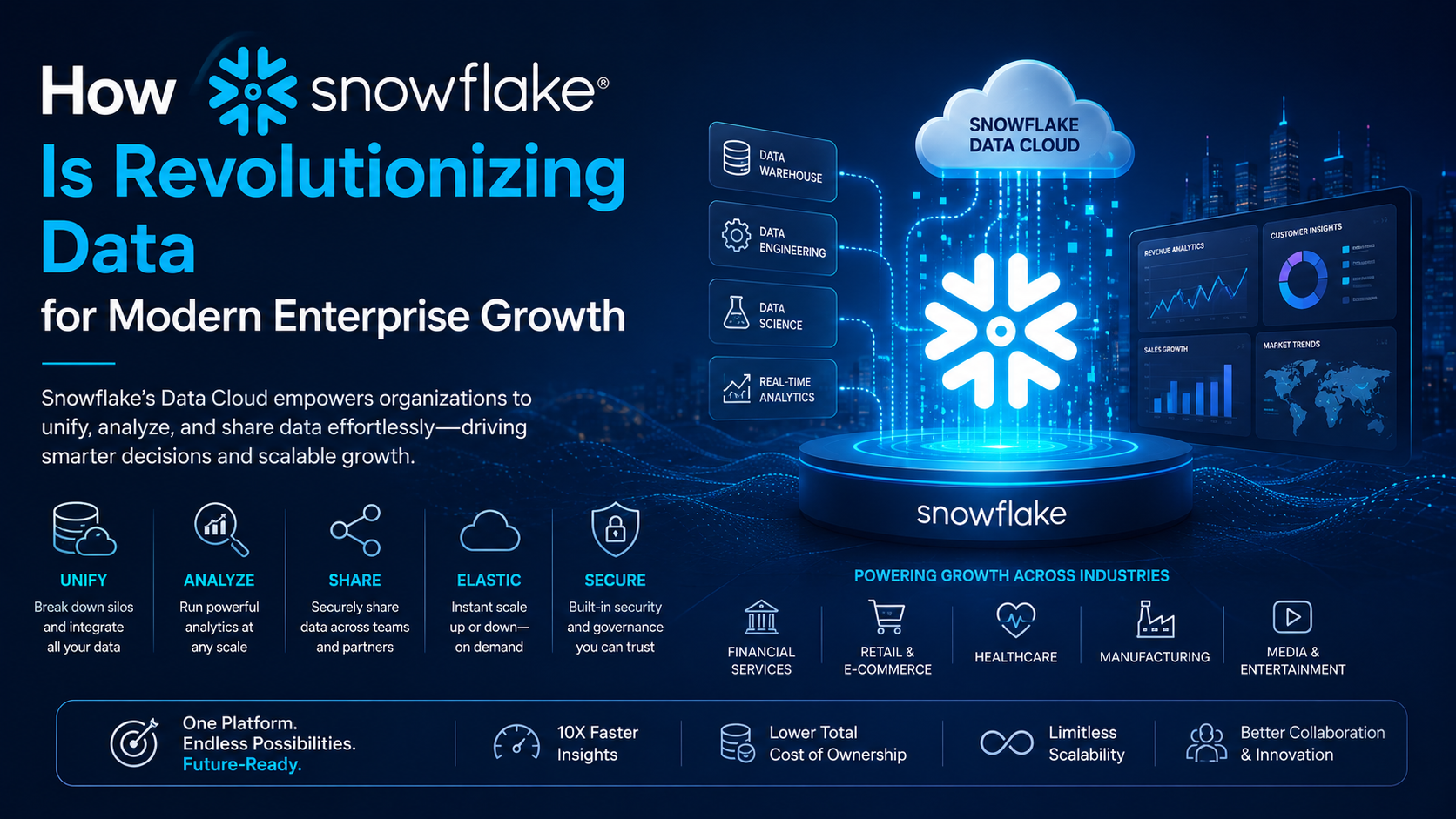
Modern growth depends on how fast a business can turn raw signals into action without losing control of cost, governance, or speed at enterprise scale today. Snowflake is revolutionizing data by giving enterprises a way to unify engineering, analytics, collaboration, and AI on one managed platform instead of stitching together brittle systems and copies.
Why the Architecture Changes the Business Conversation
The real shift starts with architecture. Snowflake separates storage from compute, so a finance dashboard, a machine learning feature pipeline, and a marketing attribution model can run at the same time on different virtual warehouses without fighting for the same resources. That sounds technical until month-end close, campaign reporting, and inventory planning stop queuing behind each other.
This matters because modern growth is usually lost in the handoff. Data lands in one system, gets copied to another, waits for transformation, and arrives too late for the team that needed it. Snowflake is revolutionizing data because it reduces that drag. Dynamic tables can refresh against a defined freshness target, streams capture row-level changes, and tasks automate downstream processing, which makes live operational reporting far more realistic than the overnight batch routines many enterprises still run.
Snowflake also handles structured and semi-structured data in the same environment, including JSON, Avro, Parquet, ORC, and XML. A retailer can ingest clickstream events, merge them with order history and inventory levels, and let merchandising react before a high-margin product goes out of stock. A manufacturer can combine sensor telemetry with warranty claims and service logs, then surface a failure pattern before it becomes a recurring cost line.
Where Enterprise Growth Actually Shows Up
Growth does not come from owning more data; it comes from making trusted data usable across more decisions. In Snowflake, secure sharing lets organizations collaborate without copying the underlying data into new silos, and zero-copy cloning lets teams test pipelines or release changes against production-shaped data without paying for duplicate storage upfront.
That reshapes the operating rhythm of the organization. Analysts have a cleaner path to self-service, engineers devote less time to routine infrastructure oversight, and security teams can enforce masking, row access policies, and monitoring within one governed environment. Economic studies of Snowflake deployments have also indicated faster payback, lower legacy management burden, and measurable productivity gains for data engineers, analysts, and data scientists when compared with fragmented legacy estates.
Practical Moves That Make Snowflake Work
The best implementations are not flashy but rather are disciplined and built for scale from the first sprint.
- Separate warehouses by workload, then use auto-suspend, auto-resume, and resource monitors so exploratory analysis does not inflate compute spend.
- Put governance in the design, not the cleanup plan, using masking policies, row access rules, and tagged sensitive data before business users multiply.
- Use zero-copy clones and time travel in release workflows so teams can validate transformations, recover from mistakes, and audit what changed.
This is where Snowflake development services matter. The platform is powerful, but value shows up only when data models, cost controls, orchestration choices, and role design match the real operating model of the business. A hurried lift-and-shift often recreates old warehouse problems in a newer interface.
Why the Platform Feels Different in Practice
What makes Snowflake stick inside large organizations is that it does not force growth teams to choose between control and momentum. A product team can build a customer-health model in Snowpark without moving data out of the platform, while a regional operations team queries the same governed foundation for service-level exceptions and renewal risk.
That operating model is why Pattem Digital sees Snowflake as infrastructure. Done well, it becomes the decision layer for the enterprise: one place where pipelines stay fresh, access stays governed, and AI initiatives start with data that is actually usable. For companies evaluating platform strategy alongside broader big data consulting services, the move is to design for workload isolation, cost visibility, and collaboration from day one.
Snowflake is revolutionizing data because it turns platform design into business leverage. Pattem Digital brings that idea down to the ground, shaping architectures that help enterprises move faster, trust the numbers, and grow without rebuilding the data stack every time a new use case arrives.