 By Admin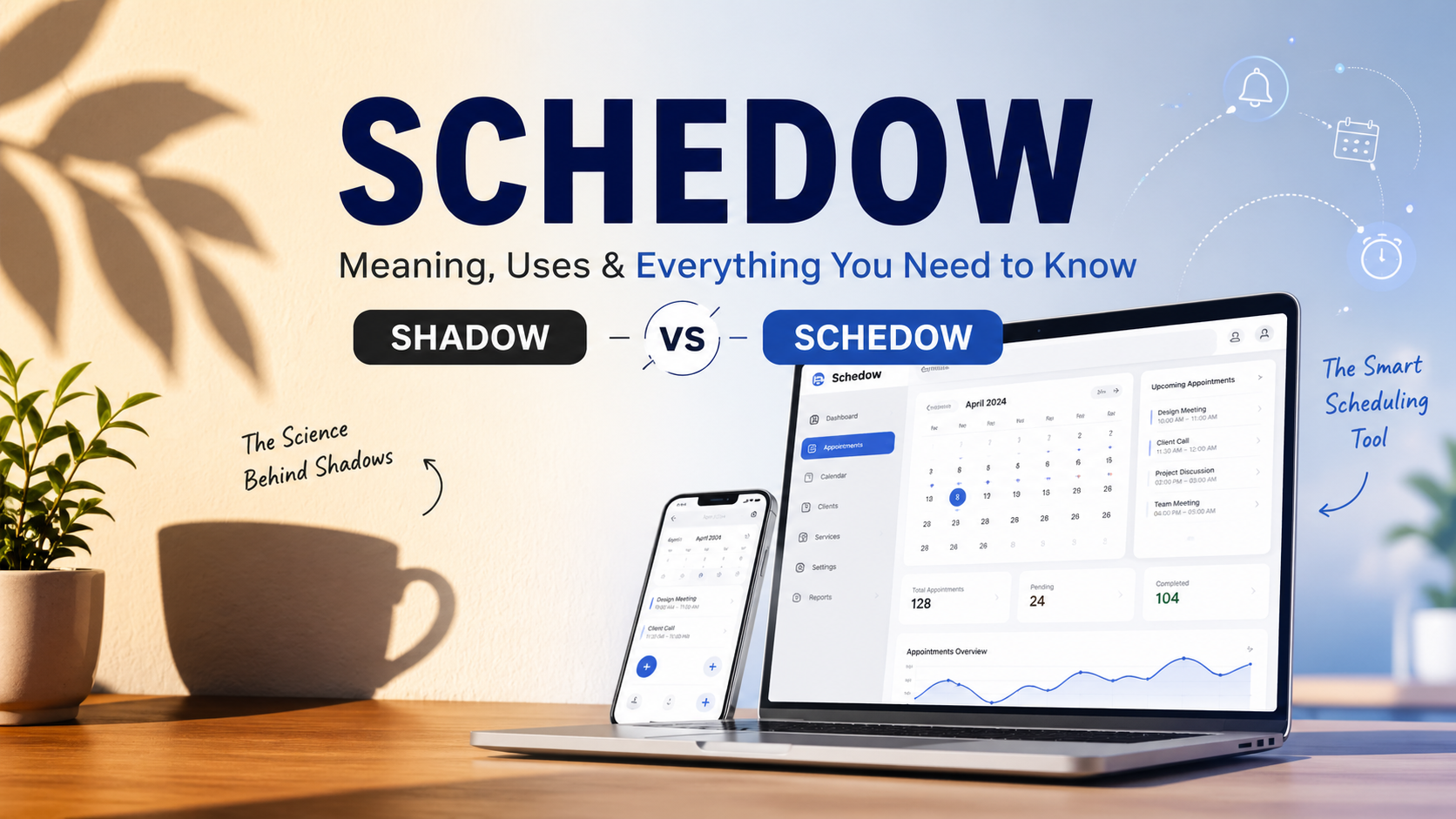
Let’s be honest for a second…
You searched “schedow”, didn’t you?
And yeah—it looks like a typo. Or maybe not? That’s where things get a little interesting.
Because “schedow” can mean two completely different things depending on what you actually intended:
- A misspelling of “shadow” (the science/meaning one)
- Or a modern online tool called Schedow (yes, that exists too)
So instead of forcing a rigid explanation… let’s walk through both. Naturally. Like a real person would.
1. The Classic Meaning of “Schedow” → Shadow
Most of the time, people searching “schedow” are actually looking for shadow.
So… what is a shadow?
At its core, a shadow is simply a dark area that appears when something blocks light.
Simple, right? But also kind of fascinating.
How a Shadow Forms
Here’s the basic idea:
- You need a light source (sun, bulb, torch)
- You need an object (you, a tree, a chair)
- And you need a surface (ground, wall)
When the object blocks the light… boom — shadow appears.
Light travels in straight lines. When something gets in the way, the light can’t pass through, so it leaves a dark shape behind.
That dark shape? That’s your shadow.
Quick Breakdown (Easy Table)
| Element | Role in Shadow Formation |
|---|---|
| Light Source | Provides the light (sun, bulb) |
| Object | Blocks the light |
| Surface | Where the shadow appears |
| Distance & Angle | Change the size and shape |
Types of Shadows (Yep, There Are Types)
Not all shadows are the same. Depending on the light source, shadows can behave differently.
- Umbra → The darkest part (no light at all)
- Penumbra → Partial shadow (some light sneaks in)
- Soft shadows → Blurry edges (like cloudy days)
- Sharp shadows → Clear edges (bright sunlight)
Basically… shadows aren’t just dark shapes. They’re a whole mini science lesson.
Fun Facts (You Probably Didn’t Think About)
- Shadows are long in the morning and evening… short at noon
- Transparent objects (like glass) don’t create strong shadows
- Your shadow is basically a 2D version of you
And yeah… kids playing with shadows? Totally normal. Even adults do it sometimes—just secretly.
2. The Other Meaning of “Schedow” (The Tool)
Now here’s where things shift.
There’s actually a modern platform called “Schedow”—and it’s not about shadows at all.
Schedow is a smart scheduling tool that helps people manage bookings, automate reminders, and organize tasks efficiently.
So if you searched “schedow” intentionally… you might have meant this.
What Schedow (Tool) Does
Think of it like a digital assistant that doesn’t complain.
- Helps you schedule appointments
- Sends automatic reminders
- Saves time (a lot of it, actually)
- Reduces manual work
Features at a Glance
| Feature | Benefit |
|---|---|
| One-click scheduling | Fast and simple setup |
| Automated reminders | No missed meetings |
| Time management | Better productivity |
| User-friendly | Easy for beginners |
And honestly… tools like this are becoming essential. Especially if you’re managing clients, bookings, or content calendars.
3. Shadow vs Schedow – Don’t Mix Them Up
Here’s a quick clarity check.
| Word | Meaning |
|---|---|
| Shadow | A dark shape formed when light is blocked |
| Schedow | Either a typo… or a scheduling platform |
So yeah… context matters.
4. Why “Schedow” Is Trending
Now you might be wondering…
Why are people even searching this word?
A few reasons:
- Typing errors (shadow → schedow)
- Curiosity about the tool
- SEO keywords (yes, people target misspellings too)
- Voice search confusion
And honestly… the internet is messy like that.
5. Real-Life Examples (Because That Helps)
Let’s make it more real.
Example 1 (Shadow)
You walk outside on a sunny day…
Look down.
That shape following you? Your shadow.
Example 2 (Schedow Tool)
You run a small business…
Clients keep forgetting appointments…
You use Schedow → problem solved.
Two completely different worlds. Same keyword. Kinda weird.
6. Why Understanding This Keyword Matters (SEO Insight)
Now here’s the part most people skip—but you shouldn’t.
If you’re targeting the keyword “schedow”:
- You’re dealing with mixed search intent
- Some users want information (shadow)
- Others want a tool (Schedow platform)
So the smart move?
👉 Create content that covers both angles (like this article does)
That way, you capture more traffic instead of guessing.
7. Final Thoughts (No Formal Ending… Just Real Talk)
So yeah…
“Schedow” isn’t just one thing.
It’s a mix of science, language mistakes, and modern tech.
And honestly, that’s what makes it interesting.
Sometimes a simple typo leads you into learning:
- How light works
- How tools improve productivity
- And how search behavior is… unpredictable
Funny how that happens.