 By Admin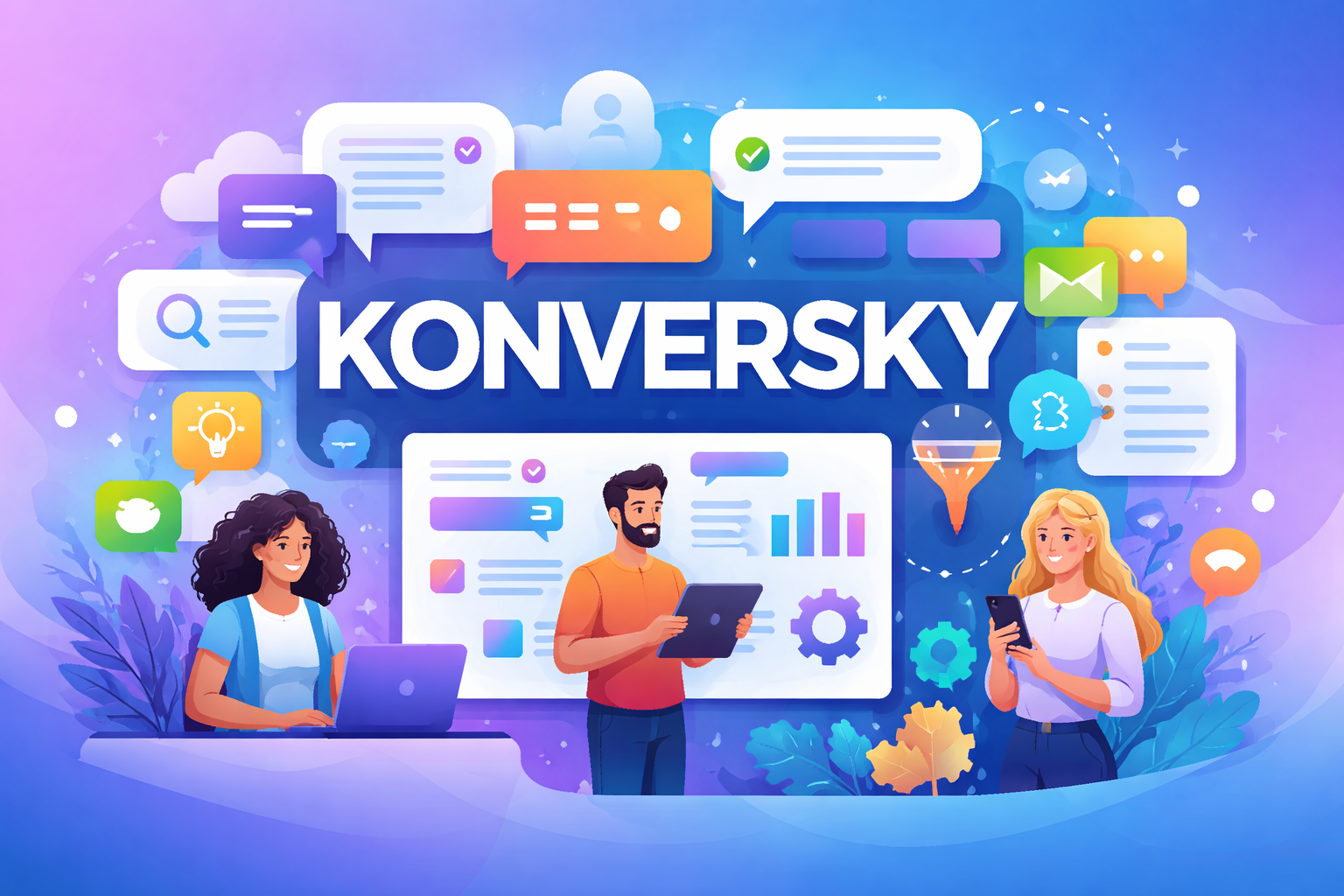
If you’ve searched for Konversky, you’ve probably noticed something a little odd. The term shows up on different websites, but not always with one exact definition. Some describe Konversky as a digital communication framework. Others present it like an AI-powered platform for automation, teamwork, customer interaction, and smarter online engagement. So yes… it’s a bit fluid right now. But the core idea stays surprisingly consistent.
At its heart, Konversky is usually explained as a modern system or concept that blends communication, conversion, collaboration, and strategy. In simple words, it’s about making digital interaction more useful, more human, and more results-focused. Instead of treating conversations, workflows, and customer engagement as separate things, Konversky brings them together.
That’s probably why the term is gaining attention. Businesses today juggle too many tools at once—chat apps, task boards, file sharing, support systems, analytics dashboards, and marketing tools. Several recent articles describing Konversky say it tries to solve that mess by creating one smarter, more connected environment. Not necessarily perfect. But cleaner, faster, and easier to manage.
A Simple View of Konversky
Here’s a quick breakdown of how current websites commonly describe it:
| Aspect | What websites say Konversky does |
|---|---|
| Communication | Improves chats, messaging, and customer conversations |
| Collaboration | Brings teams, files, and tasks into one place |
| Automation | Uses AI or smart workflows to save time |
| Conversion | Turns interaction into measurable business results |
| Strategy | Helps brands connect communication with growth goals |
This summary reflects how multiple current sources frame the term, even though they don’t all define it in exactly the same way.
Why Konversky Matters
The real reason people are interested in Konversky is pretty practical. Digital work has become noisy. Teams miss updates. Customers expect fast replies. Businesses want automation, but they also don’t want communication to feel robotic. That tension—speed vs. human connection—is where Konversky seems to fit.
And that’s important.
Because tools that only automate can feel cold. Tools that only help teams chat can become messy. Tools that only focus on marketing often ignore the actual user experience. Konversky, at least in the way it’s being described online, aims to combine those pieces into a more unified model.
Common Features Associated with Konversky
Most of the top pages currently talking about Konversky mention features like these:
- AI-assisted communication
- Unified messaging and collaboration
- Task tracking
- File sharing
- Smart automation
- Personalized customer interaction
- Cross-channel or multi-use workflows
Some sources treat Konversky as a concept, while others treat it more like a platform or software category. That’s worth noting, because the term still seems to be evolving.
Who Can Use Konversky?
Based on current articles, Konversky is often positioned for:
- Small businesses trying to simplify operations
- Marketing teams that need better engagement
- Remote teams managing communication across tools
- Startups looking for faster workflows
- Customer support teams wanting quicker, smarter replies
So it’s not just a tech buzzword… at least not entirely. The idea seems tied to real business needs: less chaos, better communication, and stronger outcomes.
One Important Thing to Understand
There is no single widely recognized dictionary-style definition of Konversky right now. Even the articles discussing it admit that the meaning can vary from site to site. One source calls it a framework. Another presents it as an AI system. Another describes it as a communication platform or digital growth model.
That doesn’t make the topic fake. It just means the term is still being shaped online.
And honestly, that happens a lot with emerging digital words.
Final Thoughts
So, what is Konversky?
The best current answer is this: Konversky is an emerging digital concept, and sometimes a platform-like idea, focused on improving communication, collaboration, automation, and conversion in one connected system. It’s being talked about as a smarter way to handle modern online interaction—especially for businesses, teams, and digital creators.
It may become more clearly defined over time. Or it may stay flexible and be used in slightly different ways across websites. But right now, the big theme is clear enough: make digital communication more useful, more organized, and more results-driven. And in a world full of scattered tools and short attention spans, that idea makes sense.