 By Admin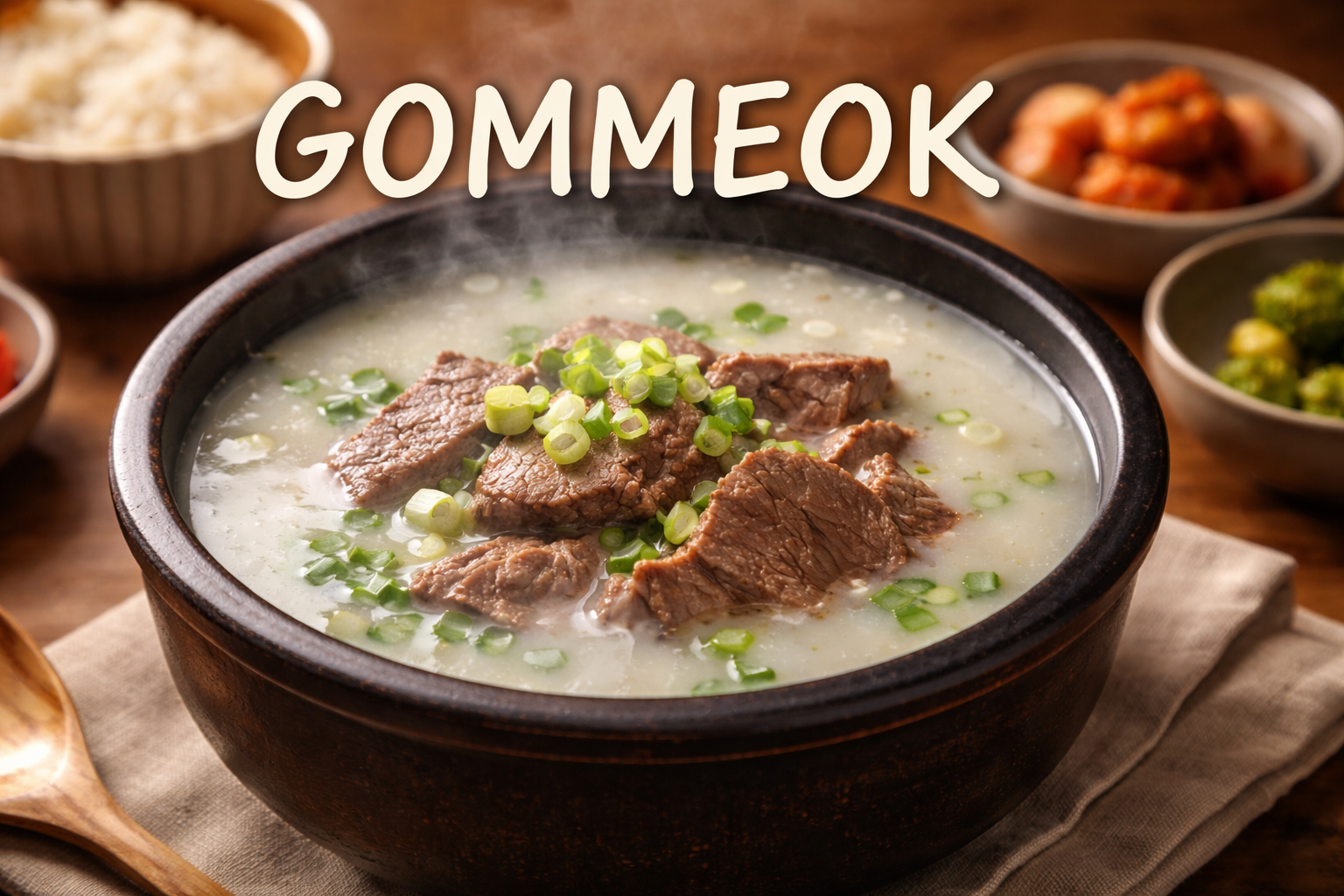
Sometimes a food isn’t just about taste. It’s about feeling… memory… warmth that sort of lingers even after you’re done eating. Gommeok—often connected to rich, slow-cooked Korean broths—falls into that category.
At first, the word might sound unfamiliar. Even a bit confusing. But once you understand what it represents, it starts to make sense… and honestly, it becomes hard to forget.
So let’s talk about it properly. No rush.
What Is Gommeok?
In simple terms, gommeok is closely associated with Korean-style bone broth soups, especially those that are cooked for long hours until they develop a deep, milky richness.
It’s not always a strict “official dish name” like you’d find on a restaurant menu. Instead, it’s more like a cultural or descriptive term tied to:
- Slow-cooked broths
- Deep, opaque soup textures
- Rich, nourishing meals
Think of it as a category… or even a feeling more than a single recipe.
The Heart of Gommeok: Slow Cooking
What really defines gommeok-style food is the cooking process.
It’s not quick. Not flashy. Definitely not rushed.
The broth is usually made by boiling beef bones (sometimes pork bones) for hours—sometimes even 10 to 15 hours. Yeah… that long.
And during that time:
- The bones release collagen
- The broth turns cloudy and creamy
- The flavor deepens… slowly
There’s something almost meditative about it.
Key Characteristics of Gommeok Food
Here’s what makes gommeok stand out from other soups:
- Milky-white broth (not clear like many soups)
- Rich, slightly fatty texture
- Deep umami flavor
- Minimal seasoning at first (salt added later)
- Served hot… always hot
And honestly, the simplicity is part of the beauty. It doesn’t rely on heavy spices. The flavor comes from time.
Common Ingredients Used
Even though gommeok isn’t one fixed recipe, certain ingredients show up again and again.
Core Ingredients:
- Beef bones (leg bones, knuckles)
- Water (lots of it)
- Garlic
- Green onions
Optional Add-ons:
- Thinly sliced beef
- Rice or noodles
- Salt and pepper (added while eating)
- Kimchi on the side (almost always)
A Simple Breakdown
| Element | Description |
|---|---|
| Base | Long-simmered bone broth |
| Color | Milky white or cloudy |
| Cooking Time | 8–15 hours |
| Flavor Profile | Deep, savory, slightly fatty |
| Serving Style | Hot, often with rice or noodles |
Popular Dishes Related to Gommeok
While “gommeok” itself might not always appear as a menu item, it’s closely linked to famous Korean dishes like:
- Seolleongtang – Ox bone soup, probably the closest match
- Gomtang – Beef soup with a lighter but still rich broth
- Galbitang – Short rib soup (a bit clearer, but still comforting)
These dishes carry that same slow-cooked, nourishing essence.
Why People Love Gommeok
It’s not just about taste. There’s more going on here.
1. Comfort Food Energy
This is the kind of meal people turn to when:
- They’re tired
- Feeling under the weather
- Or just want something warm and grounding
It’s soft. Easy. Gentle on the stomach.
2. Health Perception
Many people believe bone broth has benefits like:
- Supporting joint health (collagen content)
- Improving digestion
- Boosting overall energy
Now, not all of this is scientifically guaranteed… but culturally, it’s seen as healing food.
3. Customizable Flavor
Here’s something interesting—gommeok-style soups are often served mild on purpose.
Why?
So you can adjust it yourself:
- Add salt
- Add pepper
- Mix in kimchi
It becomes your bowl.
The Experience of Eating Gommeok
Let’s paint the scene a bit…
You’re sitting with a hot bowl in front of you. Steam rising. The broth looks simple—but thick, almost creamy.
First sip?
Mild. But deep.
Then you add a pinch of salt. Maybe some pepper. Suddenly, it opens up. The flavor gets fuller… rounder.
And with a spoonful of rice mixed in—yeah, that’s when it really hits.
It’s not loud food. It doesn’t try to impress you instantly.
It grows on you.
How Gommeok Is Different from Other Soups
A lot of soups around the world are either:
- Clear broths (like chicken soup)
- Or heavily spiced (like curries)
Gommeok sits somewhere else entirely.
| Soup Type | Texture | Flavor Style |
|---|---|---|
| Clear Soup | Light | Simple, clean |
| Spicy Soup | Thick or oily | Bold, intense |
| Gommeok-style | Milky, rich | Deep, subtle, layered |
It doesn’t rely on spice or herbs. It relies on time.
Can You Make Gommeok at Home?
Yes… but be ready.
It’s not difficult, just time-consuming.
Basic Steps:
- Soak bones in water (to remove impurities)
- Boil and discard the first batch of water
- Re-boil with fresh water
- Simmer for hours… and hours…
- Skim foam occasionally
That’s it. Simple process. Long wait.
And honestly, that’s what makes it special.
A Few Tips If You Try It
- Use high-quality bones (this matters a lot)
- Don’t rush the cooking time
- Keep seasoning minimal until serving
- Pair it with rice for the best experience
And maybe don’t expect instant results. This isn’t fast food.
Final Thoughts… Just Real Ones
Gommeok isn’t flashy. It’s not trending on every food page. It doesn’t rely on colors or presentation to grab attention.
But once you try it… properly try it… it sticks.
It’s one of those foods that feels honest. No shortcuts. No tricks. Just patience, heat, and time doing their thing.
And yeah… maybe that’s why it matters.
Because in a world where everything is quick and instant, something slow—something that takes half a day to cook—feels different.
Feels real.
So if you ever get the chance to try a gommeok-style dish… don’t rush it.
Sit with it.
Take your time.
That’s kind of the whole point.
Want to read more like this? Check out smoothiepussit for more interesting articles.